
Custom Software Development: What It Is and Why It’s Essential.
In today’s rapidly evolving digital landscape, businesses are constantly seeking innovative solutions to gain a competitive edge and optimize their operations. While off-the-shelf software offers immediate accessibility, a growing number of companies, from agile startups to established enterprises, are turning their attention to custom software development. This strategic choice, though not without its complexities, holds the potential to unlock unparalleled efficiency and tailor-made functionality. Indeed, the global custom software development market is projected to reach an astounding USD 334.49 billion by 2034, growing at a robust CAGR of 22.71% from 2025, indicating a clear industry-wide shift towards bespoke solutions (Precedence Research).
At its essence, custom software development refers to the design, creation, deployment, and maintenance of software applications specifically for a single organization or user. Unlike mass-market, commercial off-the-shelf (COTS) software, custom solutions are built from the ground up to address the unique requirements, workflows, and challenges of a particular business. This bespoke approach ensures that the final product precisely fits the organization’s operational model, rather than forcing the business to adapt to the software’s limitations. It encompasses a wide range of applications, from enterprise resource planning (ERP) systems and customer relationship management (CRM) tools to highly specialized internal management platforms and innovative customer-facing applications, all designed to seamlessly integrate with and enhance specific business operations.
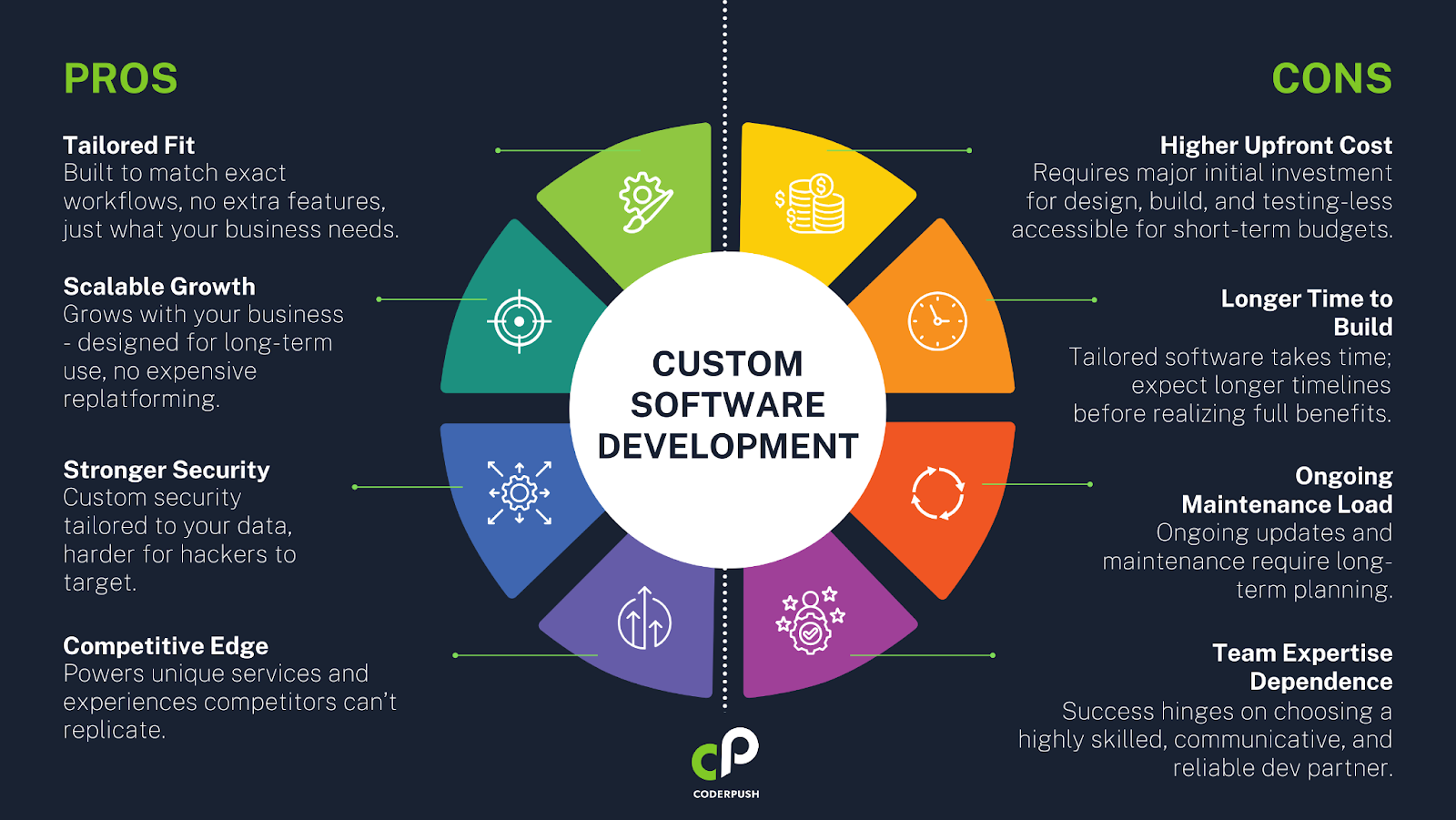
The Strategic Advantages: 4 Key Pros of Custom Software Development
The decision to invest in custom software development often stems from a desire for solutions that generic alternatives simply cannot provide. The advantages extend far beyond mere functionality, impacting operational efficiency, long-term scalability, and competitive positioning.

1. Tailored Functionality and Perfect Fit
One of the most compelling benefits of custom software is its ability to offer precise functionality. Off-the-shelf solutions often come with a plethora of features that may never be utilized, while simultaneously lacking specific functionalities crucial to a business’s unique operations. Custom software, conversely, is built to match exact business processes and requirements, eliminating redundant features and focusing solely on what drives value. This perfect fit minimizes the need for workarounds and maximizes operational efficiency; indeed, studies indicate that custom software can improve business efficiency by as much as 74% (RVS Media).
2. Enhanced Scalability for Future Growth
As businesses evolve, their software needs invariably change. Custom software development provides unparalleled scalability, allowing applications to grow and adapt alongside the company. Unlike generic solutions that might impose limitations on user capacity or data volume, custom-built systems can be designed with future expansion in mind. This foresight ensures that the initial investment remains viable and continues to support business growth without requiring costly overhauls or migrations. Research suggests that 72% of companies using custom software experience better scalability and flexibility compared to those relying on off-the-shelf solutions (Warp Development).
3. Superior Security and Data Protection
In an era where data breaches are increasingly common, security is a paramount concern. Custom software development offers a significant advantage in this regard, as security measures can be meticulously integrated from the ground up, tailored to the specific sensitivities of the business’s data and industry regulations. Unlike widely used commercial software, which can be a common target for cybercriminals due to its extensive user base, custom solutions present a smaller, less attractive attack surface, making them inherently more secure. In fact, custom software users have reported 40% fewer security breaches than those using generic options (Warp Development).
4. Gaining a Unique Competitive Advantage
In a crowded marketplace, differentiation is key. Custom software development can provide a distinct competitive edge by enabling unique business processes, delivering innovative services, or optimizing internal operations in ways that competitors cannot easily replicate. This bespoke technological foundation can translate into superior customer experiences, faster market responsiveness, or more efficient resource allocation, setting the business apart from its rivals. Furthermore, businesses using custom software have reported an average 30% improvement in operations productivity, directly contributing to a stronger market position (Warp Development).
Navigating the Challenges: 4 Key Cons of Custom Software Development
Despite its many advantages, custom software development is not without its considerations. Businesses must carefully weigh these potential drawbacks against their specific needs and resources.

1. Higher Upfront Investment
The most significant barrier to entry for custom software development is often the initial financial outlay. Building a solution from scratch requires substantial resources for design, development, testing, and deployment. This upfront cost can be considerably higher than purchasing readily available off-the-shelf software, which may make it less appealing for businesses with limited immediate capital. While the initial investment is higher, it’s worth noting that custom solutions can boost ROI by 20% compared to off-the-shelf options in the long run (Litslink).
2. Longer Development Time
Custom software development inherently demands a more significant investment of time compared to implementing off-the-shelf solutions. The comprehensive process, spanning detailed requirements gathering, intricate design, rigorous coding, and exhaustive testing, is a meticulous journey. This extended development cycle means the anticipated benefits of your tailored software may not be realized as quickly as with a pre-built product. Businesses must account for this longer time-to-market when planning, ensuring realistic timelines and managing stakeholder expectations for optimal project delivery.
3. Ongoing Maintenance and Updates
While off-the-shelf software vendors handle updates, security patches, and compatibility, a custom software solution places the full burden of ongoing maintenance and evolution squarely on the owner. This isn’t a one-time cost; it’s a perpetual commitment. Ensuring your bespoke system remains secure, compatible with evolving operating systems and third-party APIs, and adaptable to future business needs requires continuous investment in development resources. Neglecting this can lead to technical debt, security vulnerabilities, and obsolescence, diminishing the long-term value of your initial custom software development investment. A 2000s research noted that 65% of companies underestimated maintenance costs, which can strain resources over time.
4. Reliance on Development Team Expertise
The success of any custom software project hinges critically on the expertise and capabilities of the development team involved. A lack of experience, poor communication, or technical limitations can severely compromise software quality, functionality, and timely delivery. Businesses become deeply reliant on their chosen developers throughout the application’s lifecycle, making the choice of partner paramount. This isn’t merely about finding a team, but a competent and transparent one. Partnering with seasoned experts, like those at CoderPush, who prioritize clear communication, robust processes, and deep technical proficiency, is essential to mitigate these risks and ensure your custom solution meets its objectives.
Making the Right Choice: A Strategic Approach to Custom Software Development
The decision to pursue custom software development should not be taken lightly. It requires a thoughtful, strategic approach that considers all facets of the business’s current state and future aspirations.
Defining Your Needs and Goals
Before embarking on any custom software development, a thorough and precise definition of your business needs and objectives is paramount.
1/ What specific problems are you trying to solve? 2/ What processes need optimization? 3/ What are your long-term growth aspirations?
Clearly articulating these requirements will serve as the blueprint for the entire development process, minimizing ambiguity and guiding every decision. Engaging key stakeholders from various departments is crucial to capture a holistic view of requirements.
Budgeting and Resource Allocation
Custom software development represents a significant investment. It is essential to establish a realistic budget that encompasses not only the initial development costs but also ongoing maintenance, support, and potential future enhancements. Consider internal resources that can be dedicated to the project, including:
- Project managers
- Subject matter experts
- Testers
A well-defined financial strategy ensures the project’s sustainability and prevents unexpected expenditures.
Partnering with the Right Expertise
The success of your custom software project hinges largely on the capabilities of your development partner. Seek out companies with a proven track record, relevant industry experience, and a strong portfolio of successful custom software solutions. A partner like CoderPush brings not only technical prowess but also strategic insight, guiding you through every stage of the development lifecycle, from conceptualization to deployment and ongoing support. Their expertise can mitigate many of the risks associated with complex software projects, ensuring a higher likelihood of success.
Embracing Agile Methodologies
For optimal results, consider development partners who employ agile methodologies. Agile approaches, characterized by iterative development cycles, continuous feedback, and flexible adaptation to changing requirements, can significantly reduce risks and enhance the final product’s alignment with business needs. This iterative process allows for early detection of issues, facilitates rapid adjustments, and ensures that the custom software evolves in lockstep with your business, leading to more resilient and relevant solutions in a dynamic market environment.
Is Custom Software Development the Right Path for Your Business?
The journey into custom software development is a strategic one, offering unparalleled opportunities for innovation, efficiency, and competitive advantage. While it demands a greater initial investment of time and resources, the long-term benefits of tailored functionality, enhanced security, and complete ownership often far outweigh the complexities. By carefully assessing your specific needs, planning meticulously, and partnering with experienced professionals, you can harness the transformative power of custom software to build a robust technological foundation for your business’s enduring success. The escalating market size and documented gains in efficiency, security, and scalability clearly underscore why more businesses are making this strategic shift.