
Introduction: Why Deepfake Detection AI Matters
In today’s digital landscape, deepfakes-AI-generated fake videos, images, or audio-pose a growing cybersecurity threat. From financial fraud to identity theft, these hyper-realistic forgeries cause billions in damages annually. Traditional cloud-based detection methods are often slow, costly, and impractical in regions with limited internet access, especially in Asia where many rely on older devices.
CoderPush, in partnership with Singapore’s Ensign InfoSecurity, has developed a groundbreaking on-device AI deepfake detection solution that delivers fast, reliable protection directly on users’ devices. Showcased at #GoogleIO 2025, this innovation slashes detection time from 67 seconds to just 1.2 seconds, making AI accessible even on older devices common in Asia.
The Growing Threat of Deepfakes
Deepfakes: A Cybersecurity Challenge
Deepfakes utilize advanced AI models like Generative Adversarial Networks (GANs) to create convincing fake content. According to CNN World (2024), a finance employee was once deceived into transferring $25 million via a deepfake video impersonating a CFO, illustrating the severe risks to banking, fintech, and media sectors.

Limitations of Cloud-Based Detection
Traditional cloud-based solutions for detecting deepfakes rely on internet access and powerful hardware, causing delays and privacy risks. In rural Asia, spotty connectivity makes these impractical. On-device AI cybersecurity solutions process data locally, reducing latency and enhancing privacy. CoderPush’s approach delivers fast, accessible deepfake protection in Asia, even on older smartphones and laptops.
How CoderPush Tackles Deepfakes
On-Device AI Technology
CoderPush’s deepfake detector mobile app, built with Google’s LiteRT and AI Edge SDK, delivers exceptional performance:
- Speed: Cuts detection time from 67 to 1.2 seconds for real-time deepfake detection.
- Efficiency: Uses quantization and CPU/GPU delegates for low memory and power consumption.
- Offline Capability: Operates without internet, ideal for Asia’s low-connectivity areas.
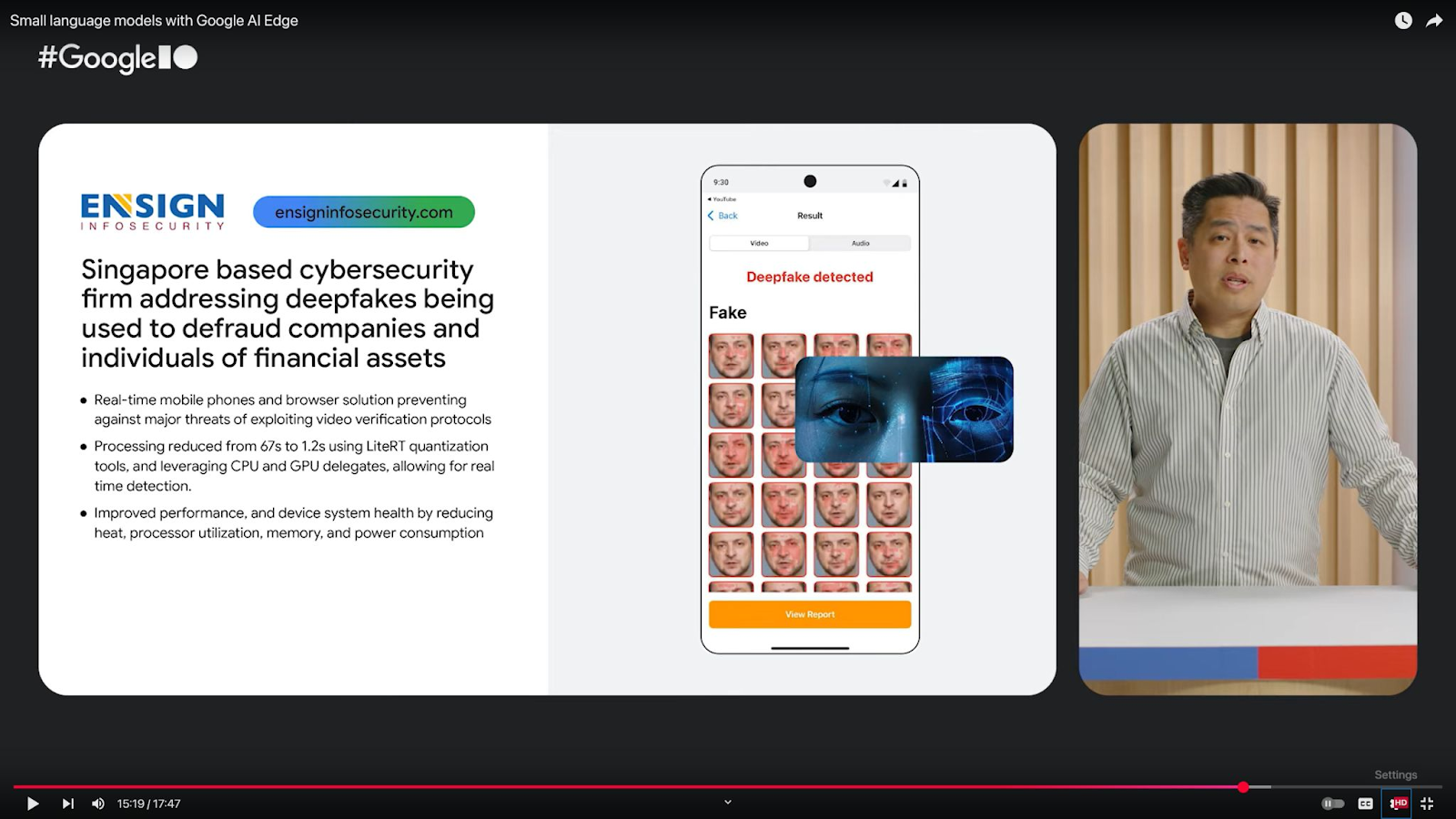
Showcased at #GoogleIO 2025, this AI cybersecurity solution runs smoothly on iPhones, iPads, and older Android devices, making deepfake protection accessible.
App Design: Simple Yet Secure
The Deepfake Detector Mobile App is designed as a bundled solution with two components installed simultaneously for a seamless user experience:
- Main App: Provides a simple user interface with a recording button to start/stop recordings, displays detection results and history, and integrates ReplayKit Broadcast Picker for easy screen recording initiation.
- Extension: Handles heavy processing tasks such as preprocessing video/audio frames, running AI deepfake detection models, and securely uploading results to an S3 bucket. It also sends local notifications upon detection completion and saves results locally in encrypted form to protect user data from unauthorized access.
This architecture balances usability with stringent security and integration requirements, ensuring efficient, secure deepfake detection without overwhelming device resources.
Overcoming Development Challenges
Solving Technical and User Needs
Creating an on-device AI deepfake detection solution presented challenges. By addressing these challenges, CoderPush successfully delivered a fast, efficient, and secure deepfake detection experience accessible to all users.
Real-World Benefits
Transforming Cybersecurity Across Sectors
CoderPush’s on-device AI solution offers tangible benefits:
- Financial Security: Enables banks and fintech firms to verify identities in real time, preventing fraud.
- Broad Accessibility: Supports low-end devices common in Asia’s diverse markets, including rural areas.
- Energy Efficiency: Reduces device heat and power consumption, extending hardware lifespan.
- Versatility: Beyond deepfake detection, the technology supports identity verification, media authentication, and IoT security.
This innovation paves the way for further Deepfake Detector Mobile App like image recognition and natural language processing in resource-constrained environments.
Protect Against Deepfakes Today
Deepfakes are surging, with a 442% increase in voice phishing in 2024, per CrowdStrike’s 2025 Report. At CoderPush, we’re committed to boosting cybersecurity with cutting-edge AI technology. This is essential for preserving digital integrity in the face of manipulated media.
Our collaboration with Ensign InfoSecurity highlights our shared mission in AI innovation for cybersecurity. The groundbreaking developments highlighted at #GoogleIO underscores our leadership in combating deepfakes. Together, we’re redefining the limits of deepfake detection.
Looking ahead, we’re optimistic about our continued advancements. These will not only bolster defenses against deepfakes but also bolster user trust in their digital interactions.
👉 Watch Ensign’s showcase at #GoogleIO (15:18) on YouTube
💡 Contact us at coderpush.com to combat deepfakes today!