
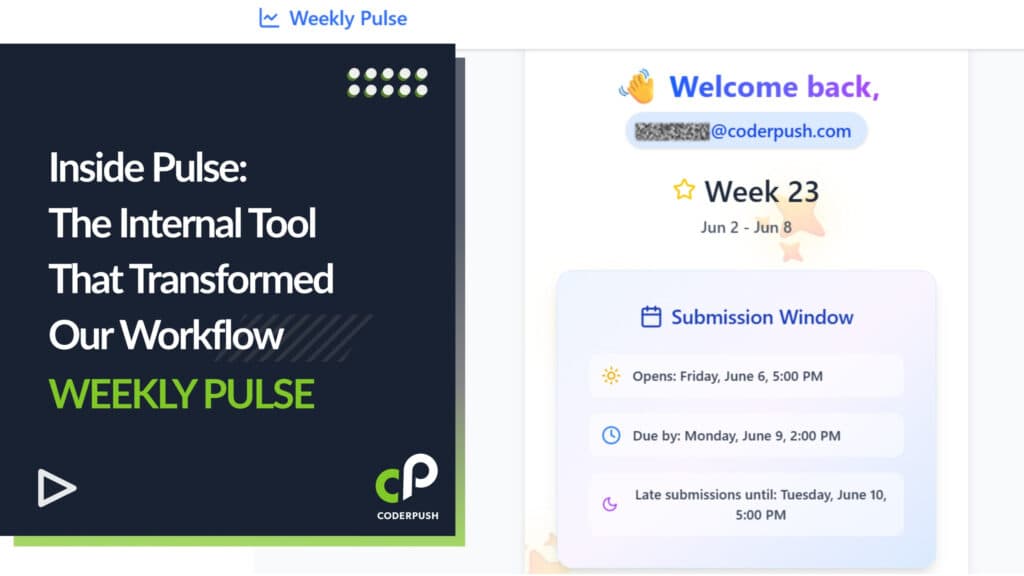
That’s why we built Pulse – our internal weekly check-in tool that empowers every team member to reflect, submit, and sync. It’s a small but consistent ritual that’s already reshaping how we work across 70+ engineers and staff worldwide.
Why We Built Pulse: Rethinking Time Tracking with Trust and Transparency
Pulse started with a clear objective: to track employee time and performance – but not through forced control or micromanagement. Instead, it was built as a tool for individual reflection, transparency with clients, and early insight for managers.
We wanted:
- A space where team members could reflect weekly on what they worked on
- Accurate data to help with billing and transparency for clients
- A system that gives managers visibility to spot issues before they escalate
Instead of heavy monitoring tools, Pulse encourages autonomy and self-awareness – while offering high signal to those who need it.
How Pulse Works: A Lightweight Habit That Builds Stronger Teams
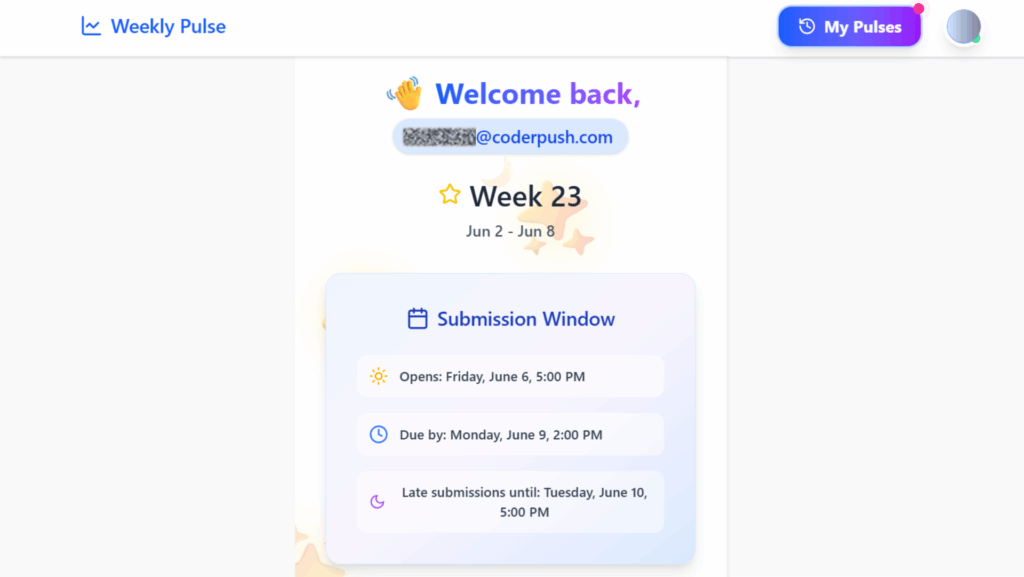
Every Friday, at 5PM sharp, Pulse reminders are sent to emails and company collaboration workspace (Mattermost). Just click and fill. Each submission includes:
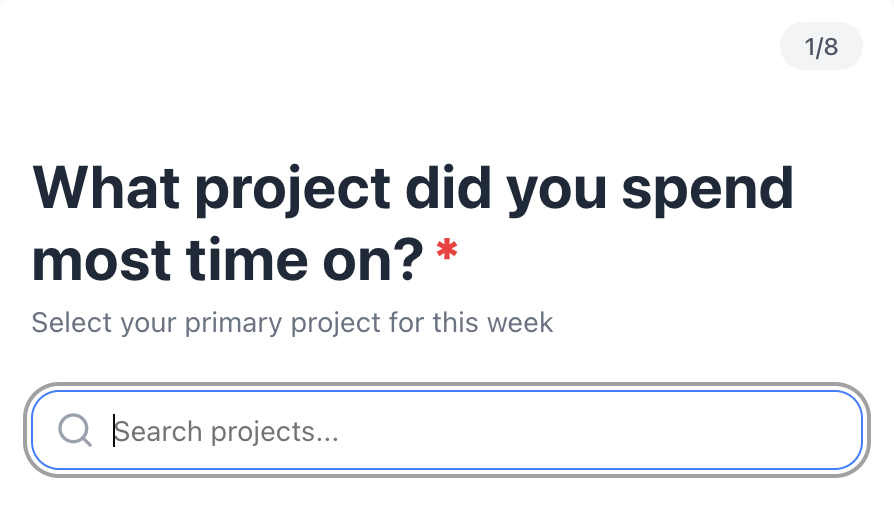
- Project focus: Where did you spend most of your time?
- Hours worked: A rough number (we don’t bill on this, we reflect on it)
- Manager: Who’s supporting or reviewing your work?
- Blockers or feedback: Optional, but powerful
- Review & submit: Confirm, click, done
The system enforces clarity:
- Submissions due by Monday 2PM
- Final cut-off Tuesday 5PM (with reminders built-in)
It’s short by design – so that it’s doable, every week, by everyone.
Under the Hood: The Dashboard That Turns Check-ins into Insight
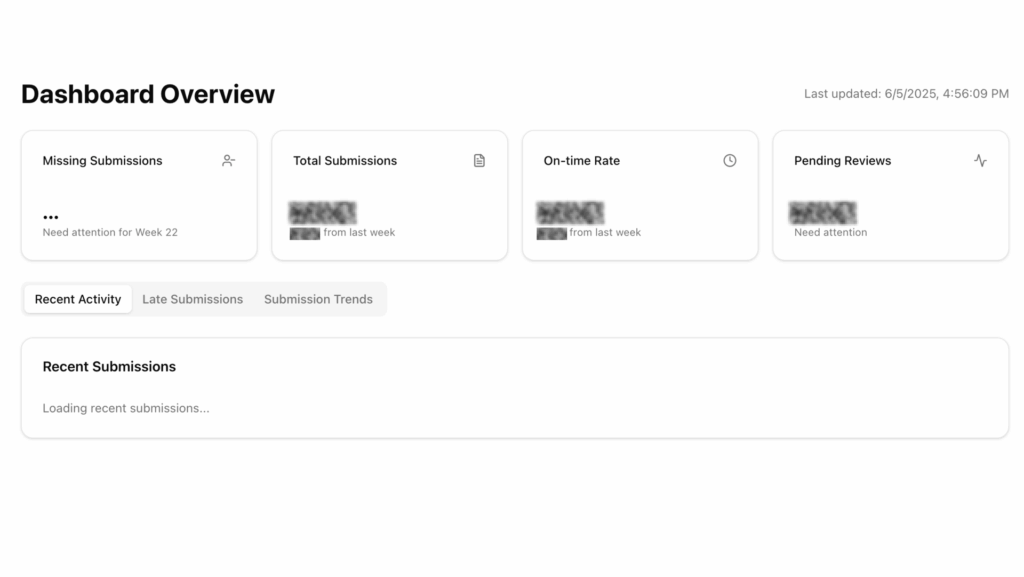
While employees just see one form, managers and admins see the big picture:
- Submission trends (on-time vs late)
- Average hours by project or team
- Tag clouds of blockers and recurring issues
- Filter by individual, week, or team
- Export data for deeper analytics or 1:1s
AI at the Core: Why We Designed Pulse AI-First from Day One
From day one, we asked: “What would this look like if AI were built-in, not bolted on?”
Here’s what that means:
- Automatic email digests and reminders
- Future AI-generated summaries and insights
- Sentiment tracking from written feedback (coming soon)
- Suggesting manager or project field via directory mapping
We also used AI to build Pulse itself – from writing the first lines of code to deploying in just a few days. The entire app was developed with heavy assistance from AI tools, including PRD writing, feature implementation, and automated code reviews. We continue to enhance the product and plan to open source it soon.
Pulse wasn’t just a tool we built. It was a mindset shift.
Impact So Far – and What We’re Building Next
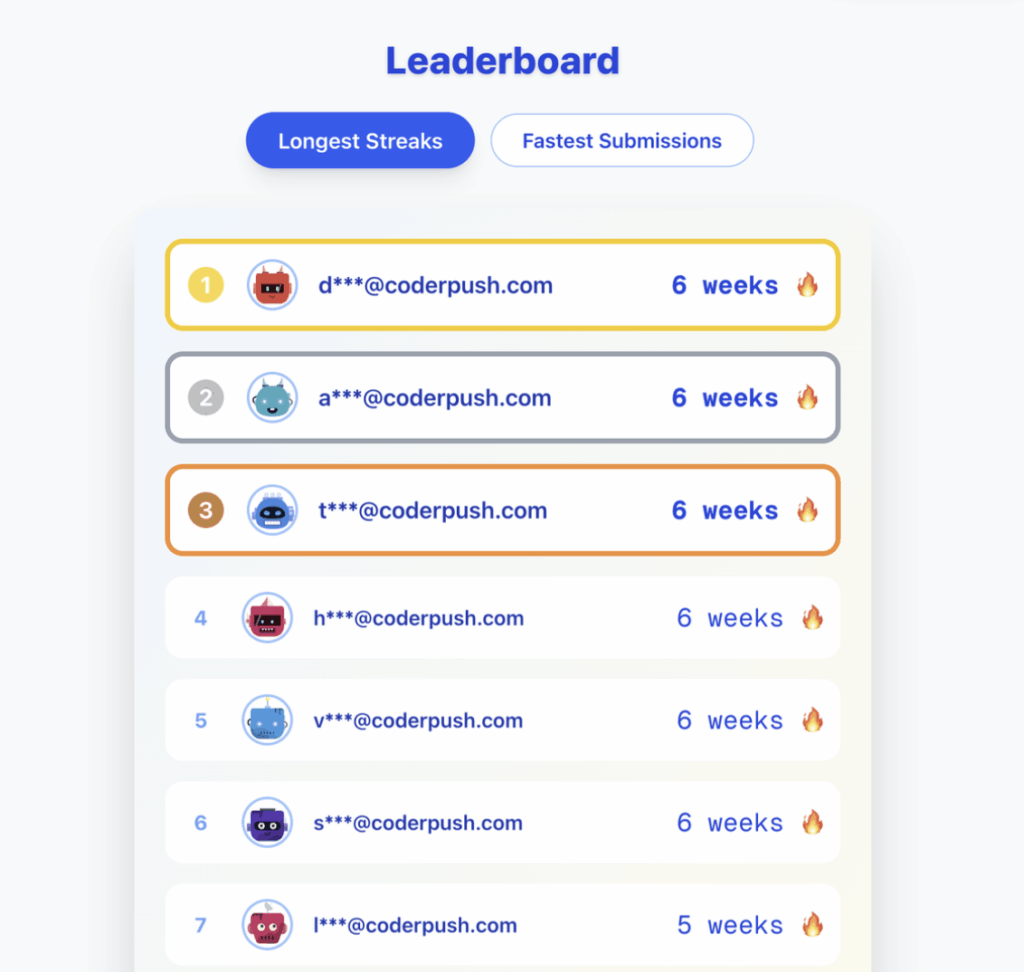
Wins so far:
- 80%+ on-time submission rate
- 50%+ of employees view their history regularly
- Managers spot issues before they escalate
- Feedback volume grew without increasing meeting load
What’s next:
- Rotating reflection questions (to prevent autopilot)
- Gamified submission streaks (habit nudging)
- AI-powered team health summaries
- Employee dashboards for personal trendlines
From On-Bench to Ownership: How Building Pulse Grew Our Developers
Pulse was shipped in under three weeks by a small internal team:
- Direction: Harley Trung
- Development: Chau Pham
- Project Assistant: Mai Dao
What’s special is that this project was developed primarily by developers who were on the bench – between client projects. Rather than waiting for the next assignment, they seized the opportunity to build something real, fast, and immediately impactful.
“This project was a personal experiment in ‘vibe coding’ – built almost entirely through conversations with AI assistants,” said Châu. “From writing the PRD to implementing features and generating both unit and integration tests, I collaborated directly with AI to move fast and stay focused.”
By working end-to-end – from idea to execution – the devs didn’t just build a tool; they leveled up their skills in product thinking, frontend/backend architecture, and real-world AI integration. It became both a learning accelerator and a platform for mastery.
Looking back, Chau shared what he would do differently:
“I’d start faster by bootstrapping AI coding workflows from day one – including custom prompt templates and guidelines. I would enforce best practices around Next.js 15 and Supabase, and set clear rules to avoid deprecated Supabase approaches or outdated coding patterns.”
The product also gave the team unexpected insights from users:
“I was surprised by how sincerely and thoughtfully some users responded to the weekly Pulse,” she added. “It revealed a real need for a space where people feel heard. It made me realize that Pulse shouldn’t just be about tracking hours – but also a way for meaningful connection.”
For CoderPush, it’s proof that building internal tools isn’t just good for culture – it’s a way to deliver better, more practical services to our clients. The faster we learn, the better we ship.
What started as a simple time-logging tool quickly became something deeper – a ritual of awareness, a signal of care, and a powerful alignment mechanism. It’s proof that when teams build for themselves, with AI from the start, the result is not just software – it’s culture.
Want to Build Something Like This?
CoderPush helps clients worldwide build custom AI-native platforms. If you’re looking to bring clarity, ownership, and rhythm to your remote team, we’d love to help.