
Vietnam has rapidly emerged as a competitive hub for AI development in Southeast Asia. With a strong STEM talent pipeline, government-backed digital transformation initiatives, and growing enterprise adoption of AI, the country is attracting global businesses seeking cost-effective, high-quality AI solutions.
However, not all AI vendors are equal.
For B2B decision-makers evaluating potential AI development partners in Vietnam, selecting the right company requires a structured assessment. Below are five key criteria that define a strong AI development company – and examples of firms that demonstrate these capabilities.
1. Why Is Vietnam Emerging as an AI Engineering Hub in 2026?
Many assume Vietnam competes primarily on cost within Southeast Asia, or in a wider region like the Asian continent. However, recent data suggests otherwise. A report from Vietnamplus shows that with 500,000 engineers and AI professionals, Vietnam has become a magnet for AI investments. With a growing AI talent pool ever since 2021, it is believed that in the near future, Vietnam will be widely recognized as a serious destination for AI engineering, not just cost-based outsourcing.
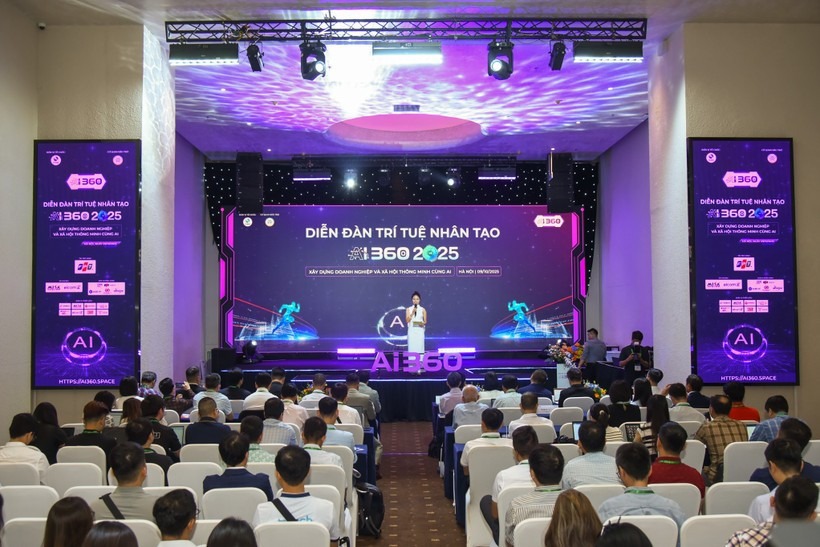
An overview of the opening session of the Vietnam Artificial Intelligence Forum 2025 on October 9, 2025. (Photo: VNA)
Rather than being treated as AI outsourcing, Vietnamese engineering teams continue to attract growing interest from international companies, such as those from Japan. With this increasing trend, Vietnamese engineers are increasingly positioned as long-term AI partners, not just outsourced support. Talented Vietnamese engineers are increasingly acting as long-term AI partners, contributing meaningfully to global AI systems and product development.
2. How to Choose The Right AI Development Partner?
1. Technical Expertise and R&D Capabilities
At the core of every successful AI project is technical excellence. A strong AI development company must demonstrate:
- Proven expertise in machine learning, deep learning, NLP, and computer vision
- Experience building scalable AI architectures
- Continuous investment in research and innovation
Instead of competing on brand reputation alone, Vietnam has focused on strengthening engineering quality through national AI strategies and structured talent development: a national AI strategy with government backing, targeted talent pipeline acceleration, and deliberate quality standard adoption across its outsourcing industry. Industry analysts consistently point to Vietnam’s balance of engineering quality and cost efficiency as a key competitive advantage.
Government-backed training programs ensure curriculum alignment with industry standards, reducing the variance in skill levels that plague other offshore markets.
2. Industry Experience and Measurable Business Impact
Technical skill alone is not sufficient. Strong AI partners translate algorithms into measurable business outcomes. Strong AI partners demonstrate impact through measurable business outcomes, whether in SaaS platforms, fintech systems, or digital product environments,… If a company has no background in a specific industry, it may not fully understand business challenges, which could make it challenging to consider them as trusted partners.
Some criteria could include:
- Provide a clear demonstration of industry-specific expertise (e.g., fintech, healthcare, retail, manufacturing)
- Provide case studies with quantifiable results
- Align AI solutions directly with ROI objectives
3. Scalable Infrastructure and Cloud Integration
Enterprise AI initiatives must scale reliably. A strong AI development company in Vietnam should offer:
- Cloud-native deployment (AWS, Azure, GCP)
- GPU-aware training and inference architecture
- Event-driven pipelines (Kafka or equivalent)
- Data lineage and observability practices
- Security-first architecture design
And ask:
- How do you handle scaling?
- How do you control AI infrastructure cost?
- What monitoring tools do you use?
A mature AI development company measures success by the real-world impact of the systems it builds – not just project delivery or feature completion; rather, they apply their AI-innovative solutions to their company’s operations, improving operational efficiency within their own organization. That should be taken into account when you look for a company that excels in the AI field, specifically in a competitive market like Vietnam.
4. Data Strategy and Responsible AI Practices
Effective March 1, 2026, Vietnam’s newly-approved Law on Artificial Intelligence established a comprehensive legal framework governing the development, deployment, and management of AI.
It seeks to ensure that AI technologies contribute to socio-economic development while safeguarding national security, data integrity, and consumer rights. AI systems are only as strong as the data behind them. Mature AI vendors distinguish themselves through disciplined data governance and ethical AI practices.
Beyond performance, buyers should ask practical questions about governance and ethics, such as:
- Structured data collection and labeling processes
- Strong data security and privacy compliance
- Human-centric development
- Clear documentation and transparent model evaluation
5. Collaborative Delivery and Long-Term Partnership Approach
Enterprise AI implementation is rarely a one-off project. It requires collaboration, iteration, and post-deployment optimization. While short-term engagements may reduce upfront costs, long-term partnerships built on trust and sustained collaboration ultimately deliver far greater strategic value.
Strong AI companies demonstrate:
- Clear communication and stakeholder alignment
- Agile development methodologies
- Ongoing maintenance and performance monitoring
- Cultural and language fluency for global clients
Factors That Define an Experienced AI Development Company in Vietnam
If you ever wonder what criteria define an experienced AI company, here is the breakdown of what separates a standard outsourcer from a true AI Engineering Partner.
1. Delivering AI Systems, Not Just Models
A partner must understand how that model interacts with your frontend, backend, and database. While the outsourcer sends you a .pkl file or a Python script and says “it works on my machine”, Partner will proactively deliver an integrated architecture with APIs, data validation, and UI/UX considerations.
2. Demonstrable Cloud and MLOps Maturity
AI is only as good as its deployment. If a partner can’t explain their CI/CD for Machine Learning (MLOps), your costs will spiral as soon as you scale. They should be fluent in AWS SageMaker, GCP Vertex AI, or Azure AI Foundry.
3. Navigating Regulated Environments
In 2026, AI governance is non-negotiable. Whether it’s the EU AI Act, HIPAA, or SOC2, your partner must know how to handle PII (Personally Identifiable Information) masking and data residency. They should implement “Privacy by Design” rather than trying to patch security holes after the system is built.
4. Clear Engineering Processes & Transparency
A partner operates as an extension of your team, using:
- Agile AI Development: Short cycles with frequent demos.
- Transparent Documentation: Readable code and clear system architecture diagrams.
- Proactive Risk Management: Telling you why an approach might fail before they spend two weeks building it.
5. Continuous Optimization
AI is not “set and forget.” Models degrade (data drift), and costs can fluctuate based on token usage. They provide monitoring for “hallucinations” and performance decay, ensuring the system evolves as your users change.
How does CoderPush Position as an AI-First Engineering Partner in Vietnam?
In this competitive market, technical expertise is no longer enough to determine what an outstanding AI development company is. Rather than that, it depends on a partner with proven engineering expertise, advanced strategic approaches, and the ability to scale with your production needs.
With proven capabilities in multiple sectors, from finance to medical, to SaaS and digital products, CoderPush operates as an AI-first engineering partner, supporting US teams with production-ready AI systems and cloud-native architecture. Partnering with 50+ global clients, Coderpush is ready to harness AI for real business results with you.
As a premier AI-first engineering partner in Vietnam, CoderPush bridges the gap between ambitious vision and technical excellence. We operate as a 100% AI-first engineering team, focused on building scalable, production-ready systems, aiming at intelligent, scalable solutions that move at the speed of modern business. In addition, our 80% long-term client retention rate is a testament to the enduring partnerships we forge.
Book a 30-min AI Technical Fit Call for a tailored consultation with top Vietnamese AI development experts.
FAQs: Common Questions of Hiring an AI Development Company in Vietnam
- What should I look for in an AI development company in Vietnam?
Look for a proven AI engineering track record, strong English communication, production-ready case studies, and clear processes for security, MLOps, and long-term support with international clients. - Is Vietnam a good destination for AI outsourcing?
Yes. Outsourcing AI to Vietnam provides access to strong AI engineering talent, competitive rates, and a good time zone overlap with the US, particularly for product-focused startups and scale-ups. - How much does it cost to hire AI developers in Vietnam?
Hiring AI developers in Vietnam typically costs significantly less than US in-house teams while still offering senior-level skills in machine learning, LLMs, and data engineering. Costs vary based on seniority and engagement model, but competitive pricing remains one of Vietnam’s advantages. - How do I choose the right Vietnam AI partner for my project?
Select a Vietnam AI partner with domain expertise in your industry, clear technical leadership, transparent communication, and references from US clients or detailed case studies. It could be great to ask for proven track records from specific industries to showcase their prominent capabilities. - What makes AI engineering teams in Vietnam competitive?
AI engineering teams in Vietnam are competitive thanks to strong math and CS backgrounds, fast learning of new AI tools, and experience building end-to-end AI systems, not just models. In practice, many AI engineers in Vietnam go through rigorous technical training programs, resulting in a highly competitive talent pool for international projects.